Why I Became a National Certified Guardian

I was a college student when I met Jada.

She was 13, a ward of the state, and living in a juvenile mental health institution. My job as a direct support professional was to help her reinvent a life outside of locked doors and clinical hallways.
Jada had been placed in foster care before her first birthday. She experienced a failed adoption, separation from her siblings, multiple foster care placements, institutional settings, and a heartbreaking amount of abuse along the way. By the time I met her, she carried a diagnosis of reactive attachment disorder, cognitive delay, and had significant mental health challenges. Her behaviors were intense. Her anger could be explosive. And beneath it all was a deep need for security.
I worked for a residential services agency that had assembled a team of young people, most of us punks and hippies, and trained us in residential care, disability services, and specifically, attachment disorder. We were tasked with designing a safe, structured home where Jada could live successfully in the community. With a substantial county-funded support budget, we staffed her home around the clock. Three staff at a time. Constant structure. Clear boundaries. Predictable routines.
And slowly, something remarkable happened.
Jada’s resilience began to shine. She was silly. Quick-witted. Loyal. Her smile was contagious. I connected with her in a way that changed the course of my life.
After about two years of direct care, I became the manager of multiple residential homes, including hers. I supervised staff, wrote care plans, and learned how to balance nurture with boundaries. I wasn’t a parent yet, but that experience shaped how I would one day raise my own children. I made mistakes. Many of them. But Jada and I stuck together.
When she turned 18, she would no longer be a ward of DCFS. She needed a new guardian. At the same time, I was preparing to enter graduate school for social work. I knew I wanted to move beyond direct care and begin impacting systems. I volunteered to become her guardian and the court appointed me.
I recently found an email I wrote to her staff in 2002, shortly after becoming her guardian. I was strategizing about her birthday plans — whether she could handle going to Old Country Buffet, whether two nights of disrupted sleep would throw off her mood, whether we were packing too much stimulation into one weekend. I ended the email with, “Maybe I’m being too cautious or too planful or too whatever.” We were both uncertain, but we were trying.
For the next 12 years, I served as her guardian, helping guide her care, advocating for appropriate treatment, navigating a complex system that both protects and, at times, fails the very people it’s designed to serve. I attended staffings and communicated with her medical and vocational teams. We had fun weekends together. She acted like an “auntie” to my children. She called me when things were hard. I learned how critical it is for someone to not only hold authority, but to hold deep knowledge of a person’s history, trauma, strengths, and dreams. Together we learned about setting and maintaining boundaries.
As she turned 30, Jada had grown tremendously. She moved from full-time staffed care to living independently with drop-in supports. She was more stable, capable, and ready to make her own decisions. I resigned as guardian and became her Power of Attorney.
Over the next eight years, she built friendships, held jobs, dated, found her biological family, and continued navigating life with growing independence. Our calls were a little less frequent and we would go longer without seeing each other. Eventually, she chose a close friend who lived nearby to serve as her POA. That decision wasn’t a loss. It was a success.
This past weekend, she took the Greyhound to Chicago, and we celebrated her 42nd birthday and our evolving 28-year relationship.
When I became Jada’s guardian in 2002, I knew very little about the guardianship system. Over the years, I learned about its protections and its gaps. I discovered how essential guardianship can be if it is ethical, informed, and personalized. I also saw how important it is to approach this role with humility, education, and accountability.
Jada is a success story in a system that fails far too many people. She succeeded because she is resilient and determined. But she also succeeded because people cheered for her. Because staff showed up consistently. Because someone answered the phone when she called. Because someone advocated when services didn’t fit. Because someone believed she was capable of more.
Jada and I changed each other’s lives. She taught me patience. Advocacy. Boundaries. Resilience. I actually met my husband, Ben, working opposite shifts in her home during those critical years. The fact that Ben and I intersected because we were trying to build safety and structure for one teenager is never lost on me, especially as we now endeavor to launch three more humans into this world. Jada showed me that guardianship is not about control — it’s about stewardship. And I hope I served her well.
I stepped away from the disabilities field for 15 years, working in federally qualified health centers and learning how complex systems shape outcomes. My husband stayed in the disability field for all those years, eventually founding a guardianship and care management agency. As he grew the company, I provided support and insights while continuing to serve as Jada’s guardian and developing my own professional competencies in healthcare administration. In 2017 I was ready for a career pivot, and I joined his company. It felt less like a career shift and more like coming full circle. He and I were again intersecting to build safety and structure for people who need it.
For me, becoming a National Certified Guardian was not about adding letters after my name. It was about honoring the responsibility I first felt sitting across from a 13-year-old girl who needed safety, structure, and someone who would not give up on her.
Becoming a National Certified Guardian wasn’t because I needed more credentials. It’s because I know, deeply and personally, how much caregivers matter. I want to offer my current clients the care, compassion, and professionalism that I wish every person along Jada’s journey could have received.
Becoming a National Certified Guardian is about protecting rights while building capacity. It is about knowing when to hold structure tightly and when to step back. It is about patience, humor, and loyalty over decades. Most of all, it is about recognizing that the people we serve are not cases or diagnoses. They are funny. They are stubborn. They are generous. They surprise you.
Becoming a National Certified Guardian formalizes my expertise, but the heart of my work started with a remarkable young girl who deserved stability and a bright future. And I remain deeply grateful that I am part of her journey.
About the Author
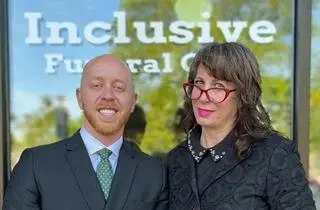
Tanya Larson is a Social Worker, National Certified Guardian, and Managing Director at Midwest Care Management Services. She has over 25 years of experience in human services, healthcare leadership, and guardianship. She began her career as a direct support professional serving individuals with developmental disabilities, has held leadership roles in federally qualified health centers and community-based nonprofit organizations, and spent significant time working on projects that aim to improve healthcare outcomes for marginalized populations.
The story shared in this article reflects the trajectory of a person and relationship that profoundly shaped her professional path. Jada reviewed this piece prior to publication and encouraged Tanya to share it. Jada hopes to one day tell her own story — in her own words.


Comments